
EMC Test Antennas (Selection Guide)
Selecting the right antenna for EMI/EMC testing depends on your frequency range, the standard you test to and whether you measure emissions or drive immunity. This guide compares every antenna type from biconical, log-periodic, BiLog, horn, loop, rod and more, guiding you to the right part. APC supplies ETS-Lindgren, PMM Narda and Antenna Systems Solutions (ASYSOL) from the UK, covering 20 Hz to 110 GHz.
How do I choose the right antenna?
Four factors decide the antenna you need:
- Frequency range: Match the antenna to your test band. Low-frequency magnetic fields need a loop, low-frequency electric fields need a rod or monopole, broadband emissions use biconical and log-periodic, microwave work uses horns
- Test standard: Your standard often dictates the antenna. CISPR requires plane-polarised antennas (biconical, log-periodic, BiLog) that switch between vertical and horizontal. Military standards do not permit the BiLog and use separate biconical and horn antennas. See the standards lookup below
- Emissions or immunity: Emissions measurement needs a stable, calibrated antenna factor. Immunity needs gain and power handling, low gain forces a larger amplifier to reach the required field strength
- Pattern and polarisation: Biconicals are near-omnidirectional; log-periodics and horns are directional with higher gain. Dipoles are the reference for calibration and site validation
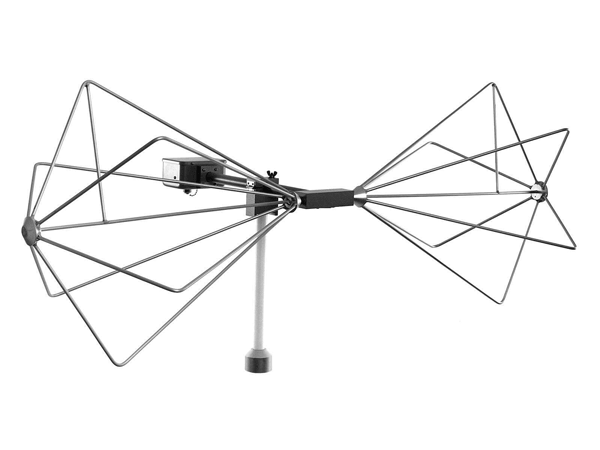
Biconical
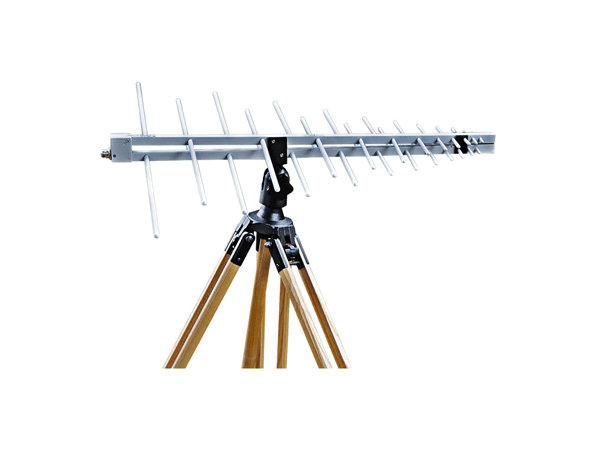
Log Periodic
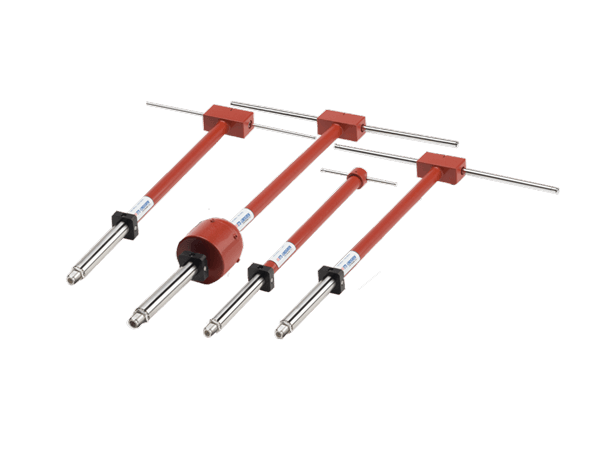
Dipole
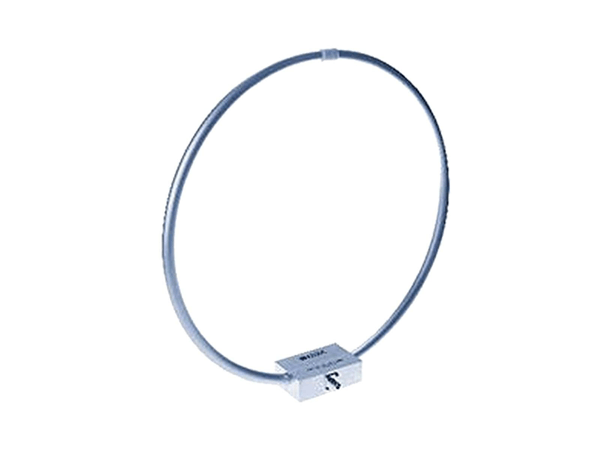
Loop
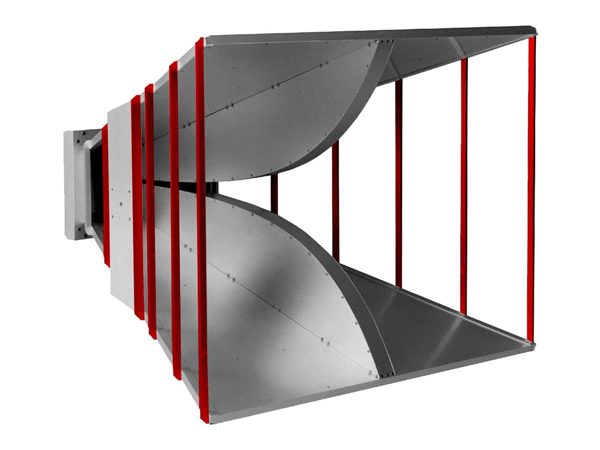
Horn
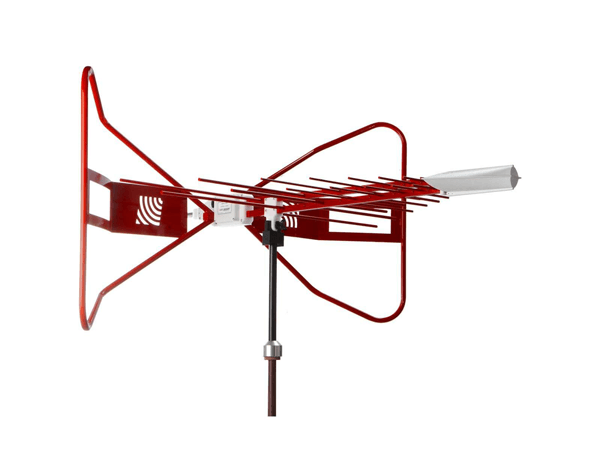
BiConiLog
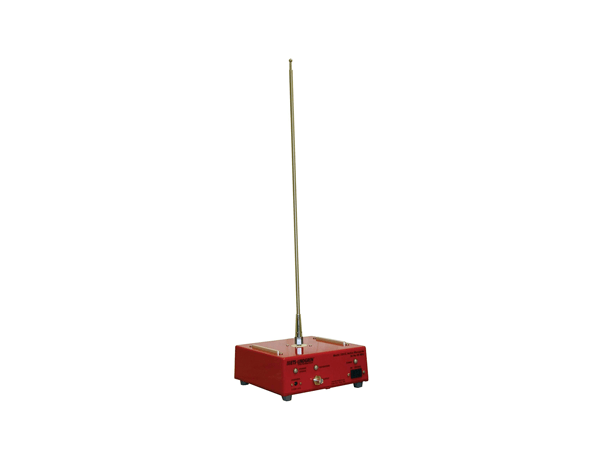
Monopole
|
Antenna type |
Frequency range |
Best for (standard/application) |
Emissions/Immunity |
Key selection note |
Brand |
|
Biconical |
20 MHz - 18 GHz |
CISPR, MIL-STD-461, CISPR 25, Broadband low end |
Both |
High VSWR at the low end, microwave biconicals (1 - 18 GHz) for site validation |
ETS-Lindgren and Narda |
|
Log-periodic (LPDA) |
30 MHz - 6 GHz |
200 MHz - GHz emissions, directional measurement |
Both |
Not permitted by military standards |
ETS-Lindgren and Narda |
|
BiLog/BiConiLog |
26 MHz - 6 GHz |
Fast commercial emissions with one antenna |
Both |
Not permitted by military standards |
ETS-Lindgren and Narda |
|
LPDA hybrid |
80 MHz - 5 GHz |
Combined low + mid coverage |
Both |
Hybrid log-periodic geometry |
ETS-Lindgren |
|
Horn (double-ridged & standard gain) |
200 MHz - 60 GHz |
Microwave emissions/immunity, antenna measurement |
Both |
High-gain suits immunity; standard-gain horns give calibrated gain |
ETS-Lindgren, Narda and ASYSOL |
|
Corrugate feed horn |
0.55 - 110 GHz |
Chamber feeds, antenna, OTA measurement |
Low cross-polarisation, symmetric pattern, reaches mmWave |
ASYSOL |
|
|
Loop (magnetic field) |
20 Hz - 30 MHz |
CISPR 25/MIL-STD, magnetic field, shielding |
Both |
Measure the H-field, active and passive options |
ETS-Lindgren and Narda |
|
Rod/Monopole (electric field) |
30 Hz - 50 MHz |
Low-frequency |
Emissions |
Active rod with counterpoise |
ETS-Lindgren and Narda |
|
Tuned dipole |
30 MHz - 1 GHz |
Site attenuation, reference calibration |
ANSI C63.5 reference for calibrating biconical and LPDA |
ETS-Lindgren |
|
|
Conical log-spiral |
1 - 10 GHz |
Circular-polarisationmeasurement |
Both |
ETS-Lindgren |
|
|
Antenna set/kit |
30 MHz - 18 GHz |
Turnkey emissions +immunity |
Both |
Biconical + log-periodic bundles, individually calibrated |
Narda |
Which antenna for which standard?
CISPR 16 / CISPR 32 (commercial emissions) - Biconical, log-periodic, BiLog; tuned dipole for calibration (Plane-polarised, switchable vertical/horizontal)
CISPR 25 (automotive) - Rod (low frequency), biconical, log-periodic, horn; loop for magnetic field (Vertical polarisation below 30MHz; both above)
MIL-STD-461 (RE102 /RS103) - Rod (10 kHz–30 MHz), biconical,double-ridged horn; loop for RE101/RS101 (BiLog not permitted)
IEC 61000-4-3 (radiated immunity) - Log-periodic, BiLog, horn (Gain matters - drives the amplifier size)
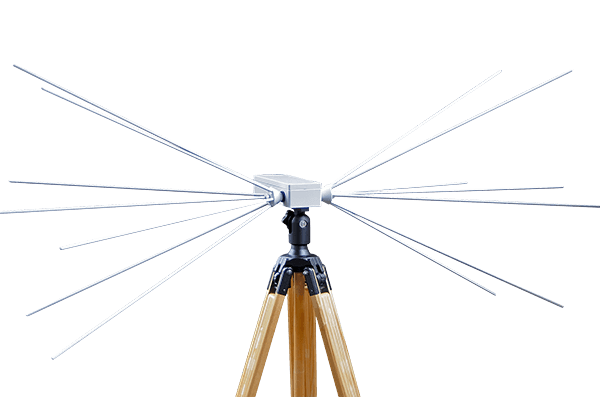
Biconical Antennas
Biconical antennas give broadband low-frequency coverage and near-omnidirectional patterns, making them a CISPR and MIL-STD-461 staple. Most cover the classic 20 - 300 MHz emissions band, while microwave biconicals reach 18 GHz for site validation above 1 GHz.
Log-periodic & BiLog Antennas
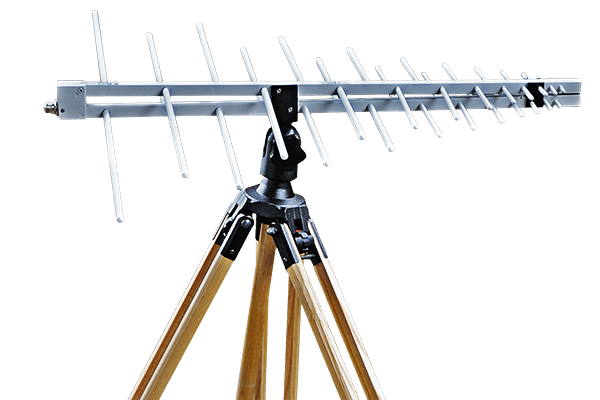
Log-periodic (LPDA) antennas are directional with a better antenna factor than biconicals, ideal from roughly 200 MHz to 1 GHz and up. BiLog (BiConiLog) antennas combine biconical and log-periodic elements, so one antenna covers the full commercial emissions band, however, military standards do not permit the BiLog.
Across the range, log-periodics cover roughly 30 MHz to 6 GHz and BiLogs 26 MHz to 6GHz, with hybrid log-periodics filling the 80 MHz -5 GHz mid-band. APC supplies all three from ETS-Lindgren, Narda PMM and ASYSOL.
ETS-Lindgren's 3140-series BiLogs are the most common single-antenna choice for commercial emissions.
Horn Antennas (Double-ridged & Standard gain)
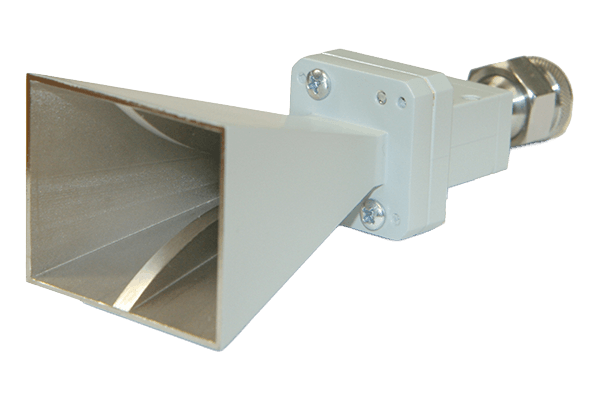
Horns deliver high gain for microwave emissions and immunity, and calibrated gain for antenna measurement. Double-ridged guide horns are broadband; standard-gain horns give a known, traceable gain per waveguide band.
Double-ridged guide horns span roughly 200 MHz to 40 GHz from a single broadband element and handle most microwave emissions and immunity work. Standard-gain horns step through the waveguide bands to 60 GHz, where a known, traceable gain is needed for antenna measurement.

Corrugated feed horns
Corrugated feed horns give a symmetric pattern and very low cross-polarisation, which makes them the standard chamber feed for antenna and over-the-air measurement. APC's ASYSOL corrugated feeds reach 110 GHz for millimetre-wave work.
Loop, Rod & Monopole Antennas
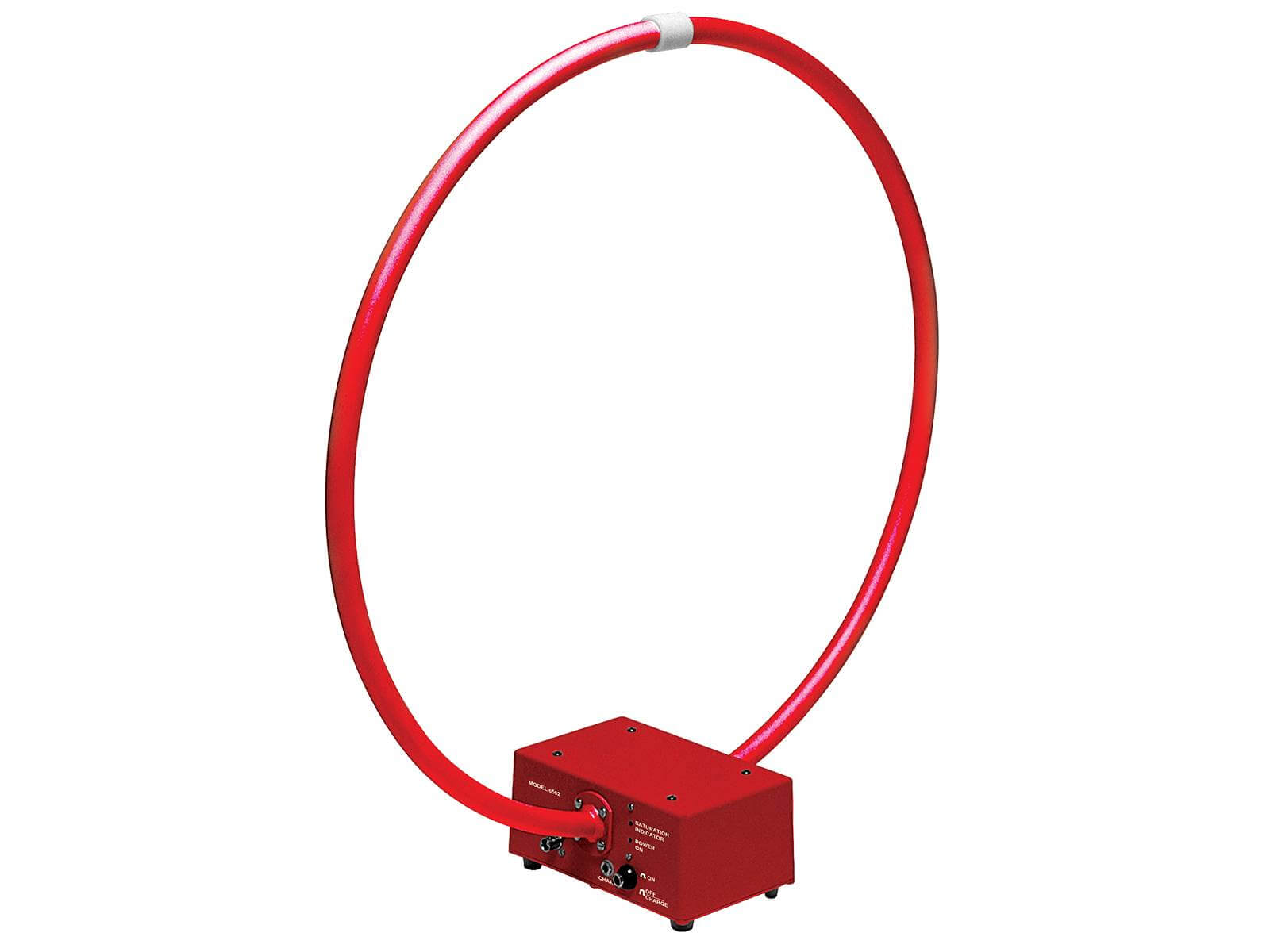
Below 30 MHz, fields are measured directly, with loop antennas sensing the magnetic (H) field and rod or monopole antennas sensing the electric (E) field.
Loops cover the very low frequencies, from around 20 Hz up to 30 MHz, while active rods and monopoles handle the electric field from roughly 30 Hz to 50 MHz. APC supplies both from ETS-Lindgren and Narda PMM, in active and passive forms.
Dipole & Specialist Antennas
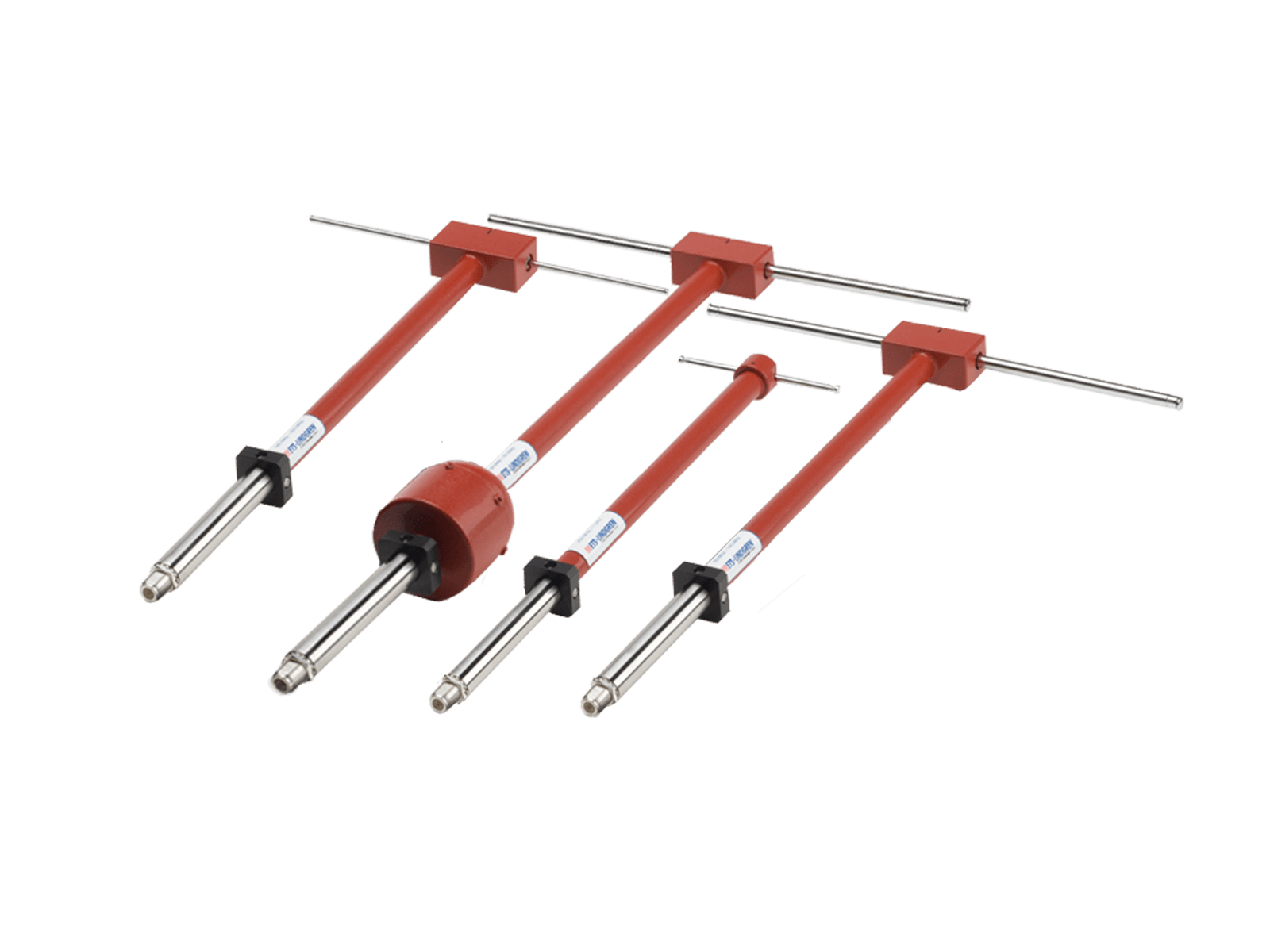
The tuned dipole is the reference antenna for site attenuation and for calibrating biconical and log-periodic antennas to ANSI C63.5, covering 30 MHz to 1 GHz. For circular-polarisation measurement, a conical log-spiral covers 1 to 10 GHz.
Antenna Sets & Kits
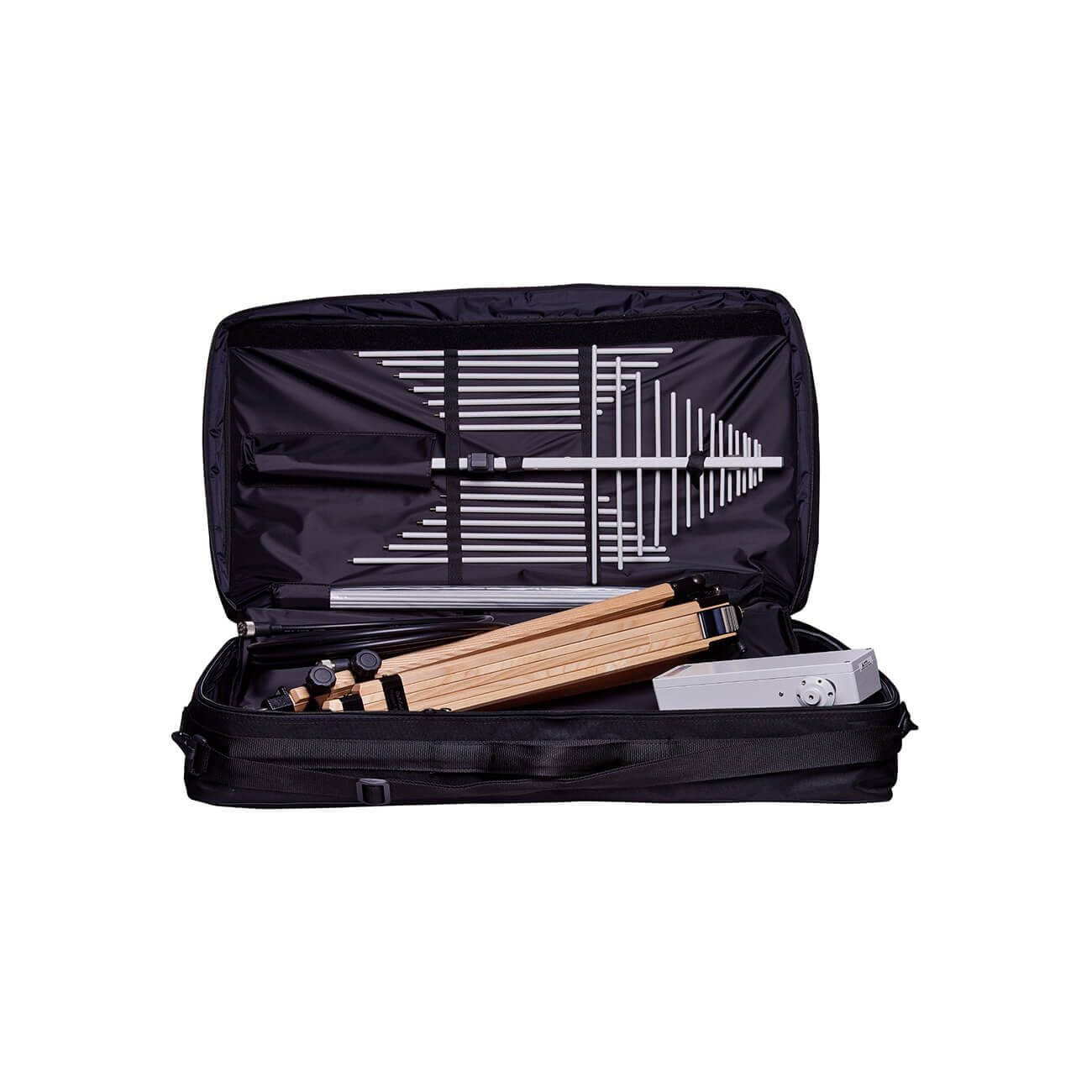
For a turnkey emissions-and-immunity setup, Narda PMM antenna sets bundle a biconical antenna and one or more log-periodic antennas, individually calibrated and mast-mountable. Sets cover 30 MHz to 3, 6 or 18 GHz, depending on configuration.
Calibration & Antenna factor (AF)
Every emissions measurement applies an antenna factor to convert received voltage to field strength, so a calibrated antenna with a stable factor is essential. Biconical, log-periodic, BiLog and double-ridged horn antennas all calibrate well, with the tuned dipole as the ANSI C63.5 reference.
APC supplies antennas with calibration and can arrange calibration, typically to be carried out every 12 months for active antennas and 24 months for passive types.
Find the Right EMC Antenna with APC
Tell us your frequency range, the standard you're testing to and whether you're measuring emissions or performing immunity testing. Our EMC specialists will recommend the most suitable antenna and provide a tailored quotation.
Speak to our EMC experts today for antenna selection advice and a competitive quotation.
Frequently asked questions
Which antenna do I need for radiated emissions vs immunity?
Emissions needs a calibrated antenna factor (biconical, log-periodic, BiLog). Immunity needs gain and power handling (log-periodic, BiLog or horn), because low gain forces a larger amplifier.
What's the difference between Biconical, log-periodic and BiLog?
Biconicals cover the low broadband band and are near-omnidirectional. Log-periodics are directional with a better antenna factor. BiLogs combine both in one antenna, but aren't allowed under military standards.
Which antenna does CISPR 25 or MIL-STD-461 require?
CISPR 25 uses a rod at low frequency, then biconical, log-periodic and horn, with a loop for magnetic field. MIL-STD-461 uses a rod, biconical and double-ridged horn, not a BiLog.
What is antenna factor?
The ratio that converts the voltage at the antenna terminals to the field strength at the antenna. It's applied as a correction during compliance measurement.
Do the antennas come calibrated?
Yes. Antennas can be supplied with calibration and APC can arrange re-calibration to ANSI C63.5 / CISPR 16 with traceable uncertainty.
What covers above 18 or 40 GHz?
Standard-gain and corrugated feed horns reach 60 GHz and 110 GHz, respectively for millimetre-wave measurement.