
CISPR 16 Explained with Setup, Methods & Compliant Equipment
CISPR 16 is the standard behind the instruments used in most EMC testing. This guide explains what each part covers accurately and maps the equipment you need to comply, from EMI receivers and LISNs to antennas and test sites.
What is CISPR 16?
CISPR stands for Comité International Spécial des Perturbations Radioélectriques, the International Special Committee on Radio Interference, a committee of the IEC. CISPR 16 is the basic EMC standard that specifies the measuring equipment and the methods used to test radio disturbance (emissions) and immunity. Importantly, it does not set emission limits, those are defined by product standards such as CISPR 11 and CISPR 32.
CISPR 16 defines how a valid measurement is made, from receivers, coupling devices, antennas, test sites and the procedures for using them. It generally covers 9 kHz to 18 GHz and can extend higher, holds the status of a basic EMC publication and is harmonised with ANSI C63.2 (the instrumentation standard behind ANSI C63.4 and FCC testing).
How CISPR 16 is structured
|
Part |
Covers |
|
CISPR 16-1 |
Measurement equipment - receivers, coupling devices, antennas and test sites (six sub-parts) |
|
CISPR 16-2 |
Methods of measurement - conducted, disturbance power, radiated and immunity |
|
CISPR 16-3 |
Technical report - background, rationale and history (not a specification) |
|
CISPR 16-4 |
Uncertainties, statistics and limit modelling (five sub-parts) |
CISPR 16 part by part
CISPR 16-1-1 - Measurement equipment (receivers):
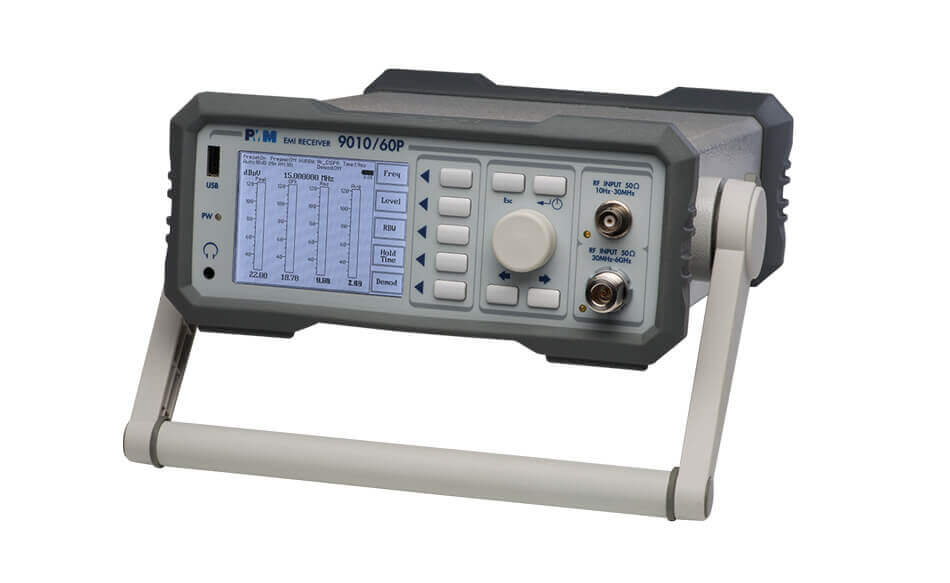
Specifies the measuring (EMI) receiver, the CISPR detectors, peak, quasi-peak, average and RMS-average plus the bandwidths, accuracy and pulse response that make a reading valid.
CISPR 16-1-2 - Coupling devices for conducted disturbance:
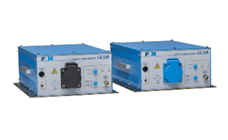
Specifies the coupling devices used for conducted measurements: artificial mains networks (AMN/LISNs), current and voltage probes and coupling units (CDNs) across roughly 9 kHz to 1 GHz.
CISPR 16-1-3 - Ancillary equipment, disturbance power:
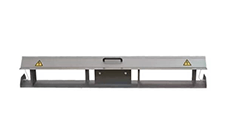
Specifies the absorbing clamp used to measure disturbance power and its calibration, typically over 30 MHz to 1 GHz.
CISPR 16-1-4 - Antennas and test sites for radiated disturbance:
Specifies the antennas (biconical, log-periodic, hybrid, horn) and the test sites (OATS, semi-anechoic chambers) for radiated measurement, 9 kHz to 18 GHz.
CISPR 16-1-5 - Antenna calibration sites and reference test sites:
Specifies the sites used to calibrate antennas and to validate reference test sites, including the site characteristics that must be verified.
CISPR 16-1-6 - EMC antenna calibration:
Specifies the methods for calibrating EMC antennas and deriving the antenna factor used to convert a measured voltage into field strength.
CISPR 16-2-1 - Conducted disturbance measurements:
The method for measuring conducted emissions at the mains and other terminals, using an AMN/LISN and a measuring receiver.
CISPR 16-2-2 - Measurement of disturbance power:
The method for measuring the disturbance power on cables using the absorbing-clamped technique.
CISPR 16-2-3 - Radiated disturbance measurements:
The method for measuring radiated emissions with calibrated antennas on a validated test site, 9 kHz to 18 GHz.
CISPR 16-2-4 - Immunity measurements:
The methods for immunity (susceptibility) measurement, the immunity counterpart to the emissions methods above.
CISPR 16-3 - Technical reports:
An IEC technical report holding background, rationale and historical information that supports the other parts. It is not a specification.
CISPR 16-4 - Uncertainties, statistics and limit modelling:
Five sub-parts covering measurement uncertainty and statistics: 16-4-1 (uncertainties in standardised EMC tests) and 16-4-2 (measurement instrumentation uncertainty), plus the statistical treatment of compliance for mass-produced products, complaint statistics and limit modelling and the conditions for using alternative test methods.
Which equipment meets which part
Most CISPR 16 guides stop at explaining the standard. Here is the equipment that satisfies each part, all supplied by APC.
|
CISPR 16 part |
What it specifies |
Equipment you need - All supplied by APC |
Current standard edition |
|
16-1-1 |
Measuring / EMI receivers (CISPR detectors) |
EMI / measuring receiver |
|
|
16-1-2 |
Coupling devices for conducted (AMN/LISN, probes & CDNs) |
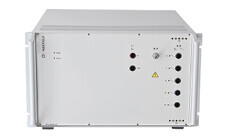
LISNs, current/voltage probes, CDNs |
|
|
16-1-3 |
Ancillary equipment - disturbance power |
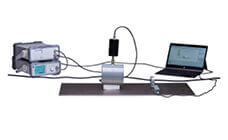
Absorbing clamp |
|
|
16-1-4 |
Antennas & test sites for radiated |
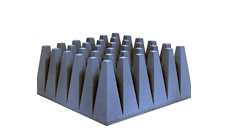
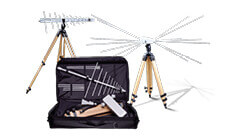
Biconical, log-periodic, BiLog, horn antennas, chamber /OATS |
|
|
16-1-5 |
Antenna calibration & reference sites |
Calibration site, reference antennas |
|
|
16-1-6 |
EMC antenna calibration |
Tuned dipole, calibration service |
|
|
16-2-1 |
Conducted disturbance method |
Receiver, LISN, software |
|
|
16-2-2 |
Disturbance power method |
Absorbing clamp, receiver |
|
|
16-2-3 |
Radiated disturbance method |
Antennas, chamber/OATS, receiver |
|
|
16-2-4 |
Immunity measurements |
Signal generator, amplifier, field probe, antenna |
All the equipment you need above - supplied by APC Technology Group

CISPR 16 for Emissions vs Immunity
Emissions
Measurement applies a calibrated antenna factor and a CISPR detector to read field strength or terminal voltage, so you need a compliant receiver (16-1-1) the right coupling device or antenna (16-1-2 / 16-1-4) and a validated site (16-1-5).
Immunity
Measurement drives a known field at the equipment under test, so the emphasis shifts to a signal source, power amplifier, field probe and a gain antenna (16-2-4). Antenna gain matters, low gain forces a larger amplifier to reach the required field strength.
Ask a Member of our Expert Team
APC Technology Group prioritises understanding and exceeding our customers' specific EMC requirements. We achieve this through a collaborative approach, tailoring solutions to meet each client's unique specifications, ensuring timely delivery and adhering to established budgets.
Contact a member of our team to get dedicated one-to-one consultancy with your latest projects and applications.
FAQ
Does CISPR 16 set emission limits?
No. CISPR 16 specifies the measuring equipment and methods. Emission limits are set by product standards such as CISPR 11 and CISPR 32.
What's the difference between CISPR 16-1 and 16-2?
16-1 specifies the equipment (receivers, coupling devices, antennas and test sites) whilst 16-2 specifies the methods for using them to measure conducted, disturbance-power, radiated and immunity phenomena.
What frequency range does CISPR 16 cover?
Generally, 9 kHz to 18 GHz, with provision to extend higher.
What receiver do I need for CISPR 16?
A measuring (EMI) receiver compliant with 16-1-1, providing the CISPR detectors - peak, quasi-peak, average and RMS-average at the correct bandwidths.
Is CISPR 16 the same as ANSI C63.2?
They're harmonised. ANSI C63.2 is the US instrumentation standard called up by ANSI C63.4 for FCC testing; CISPR 16 is its international counterpart.
Which antenna does CISPR 16-1-4 require?
Calibrated antennas appropriate to the band (biconical, log-periodic, hybrid (BiLog) and horn) See the EMC test antenna guide for selection by frequency and standard.